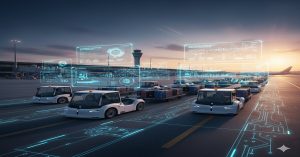
The race to develop autonomous vehicles is quietly laying the groundwork for something even more transformative: humanoid robots. What began as a push to automate driving is now expanding into a broader vision where machines can operate in the physical world, performing tasks once reserved for humans. Industry leaders increasingly believe this shift could unlock a market worth well over $100 billion by the end of the decade.
At the center of this momentum is rapid progress in artificial intelligence. Advances that enable cars to navigate complex environments are now being adapted to robots designed to work in factories, warehouses, and even homes. The idea is simple but powerful—machines taking over repetitive, physically demanding, or time-consuming jobs, allowing people to focus on higher-value work.
Several forces are accelerating interest in robotics. One major factor is a shrinking labor pool. In the United States alone, projections suggest a shortage of nearly 2 million factory workers within the next decade, while warehouse jobs continue to see high turnover. At the same time, China is aggressively scaling factory automation, outpacing the U.S. by a wide margin. This growing gap is putting pressure on companies to adopt robotics not just as an efficiency tool, but as a competitive necessity.
Executives say automation is no longer viewed as a simple capital investment—it’s becoming a strategic priority. Mentions of robotics in corporate filings have surged, signaling a broader shift in how businesses think about technology. According to industry forecasts, the global robotics market could more than double by 2030, with millions of machines deployed worldwide. Humanoid robots alone are expected to account for a significant share of that growth in the years that follow.
Still, the road ahead is far from smooth. Despite the excitement, major technical and cultural challenges remain. Robots must become far more capable—able to understand their surroundings, manipulate objects with precision, and adapt to unpredictable situations. Unlike autonomous vehicles, which operate in relatively structured environments, humanoid robots must function in a wide range of settings, from factory floors to living rooms.
There are also human factors to consider. Trust in robotics doesn’t develop overnight. Companies report that it can take years for workers to feel comfortable collaborating with machines. Concerns about safety, job security, and reliability can slow adoption, even when the technology is ready.
Automotive companies are uniquely positioned to lead this transition. Their experience with complex supply chains, safety standards, and large-scale manufacturing gives them an edge in bringing robotics to market. Many are already investing heavily in the space. For example, Boston Dynamics is preparing to test humanoid robots in industrial settings, while Qualcomm and Nvidia are developing specialized chips and AI platforms to power next-generation machines. Meanwhile, Tesla is shifting part of its production focus toward building humanoid robots at scale.
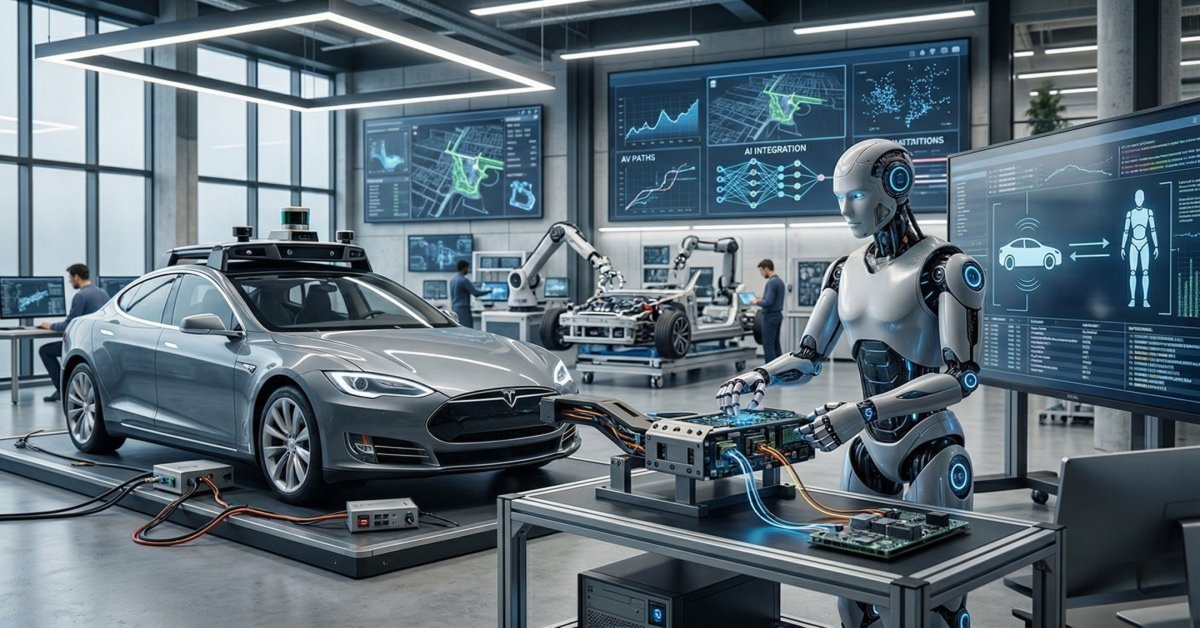
The connection between self-driving cars and robotics runs deep. Both rely on similar technologies—sensors, AI models, simulation tools, and data processing systems. Companies working in autonomous driving are now leveraging that expertise to accelerate robotics development, creating a feedback loop that benefits both fields.
However, scaling robotics will require more than just technological breakthroughs. It will depend on building a robust ecosystem of suppliers capable of producing reliable, long-lasting components at scale. It will also require companies to rethink how they integrate machines into their operations, ensuring that workers are part of the transition rather than sidelined by it.
In the near term, industrial applications are expected to lead adoption, as structured environments make deployment easier and returns more predictable. Consumer-facing robots will likely take longer to mature.
Despite the hurdles, optimism remains high. Many industry leaders believe that within the next decade, robots will become a common presence in workplaces around the world. The foundation is already being laid—one autonomous system at a time.