Honda, in partnership with DriveOhio, has completed a two-year pilot program that demonstrates how artificial intelligence and vehicle-generated data can transform roadway maintenance. The initiative marks the nation’s first large-scale test of a proactive road maintenance system that uses real-time data from vehicles to detect infrastructure issues before they become costly or dangerous problems.
The pilot evaluated how automated detection technology could support transportation agencies by identifying road deficiencies, prioritizing repairs, and reducing operational expenses. Over the course of the project, the system analyzed approximately 3,000 miles of roadway across Ohio, operating in a wide range of real-world conditions that included varying road types, weather, and lighting environments.
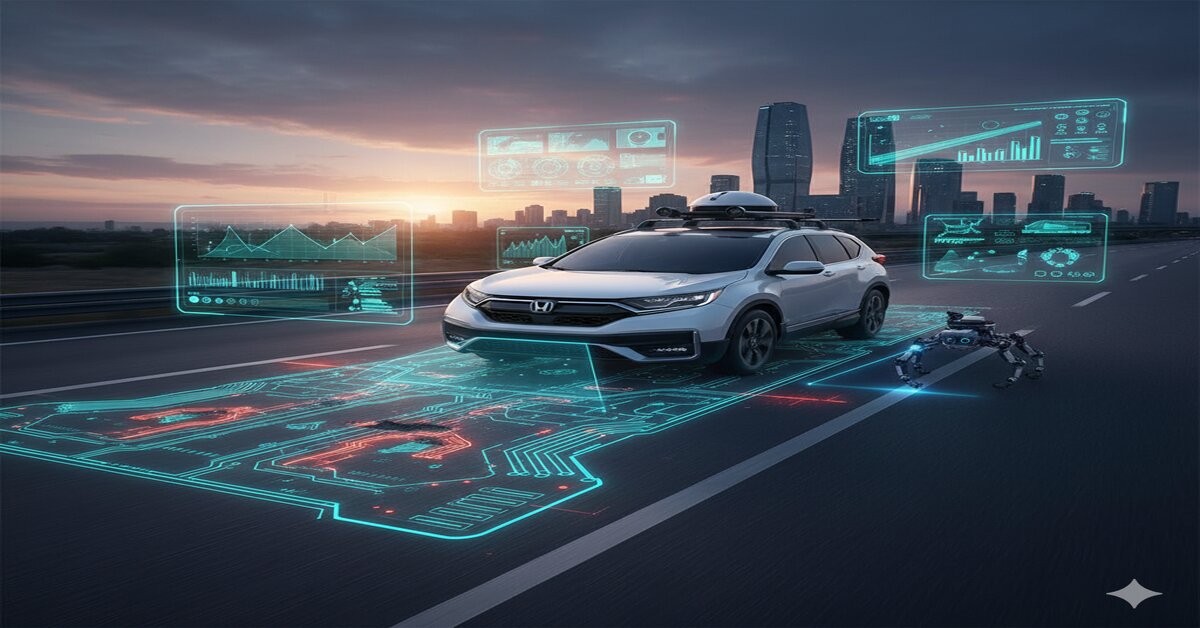
Funded by the Ohio Department of Transportation (ODOT), the project was led by Honda in collaboration with i-Probe Inc., Parsons Corporation, and the University of Cincinnati. Test vehicles were equipped with advanced camera-based vision systems and LiDAR sensors capable of capturing detailed roadway and roadside infrastructure data while traveling at normal traffic speeds. This sensor data formed the foundation for an AI-driven assessment of road conditions that traditionally require labor-intensive visual inspections.
The Proactive Roadway Maintenance System was designed to identify and classify multiple types of infrastructure issues. These included damaged or obscured road signs that may need cleaning or replacement, compromised guardrails and cable barriers, emerging potholes with precise size and location measurements, and shoulder drop-offs measured by depth and percentage. The system also evaluated lane striping quality—an increasingly important factor for advanced driver-assistance systems—and assessed overall road roughness independent of vehicle age or condition.
At the technical level, the platform combined several layers of data processing. Edge-based AI models analyzed sensor inputs directly within the vehicle, while Honda’s cloud infrastructure received and further processed transmitted data. The findings were then integrated into Parsons’ iNET Asset Guardian system, enabling automated maintenance workflows. Repair tasks were prioritized based on severity and geographic clustering, allowing maintenance crews to operate more efficiently. ODOT personnel reviewed results through web-based dashboards and could flag misdetections, creating a feedback loop that continuously improved system accuracy.
Performance results from the pilot were strong. The system achieved 99 percent accuracy in detecting damaged or obstructed signs and 93 percent accuracy for damaged guardrails. Average pothole detection accuracy reached 89 percent. Notably, the technology proved effective at identifying severe shoulder drop-offs that are often missed during routine inspections. Lane marking analysis also showed that only a small portion of surveyed roads required restriping, highlighting opportunities for more targeted maintenance planning.
ODOT estimates the system could generate more than $4.5 million in annual savings by reducing manual inspection needs, optimizing maintenance schedules, and preventing expensive deferred repairs. In addition to cost benefits, the approach improves worker safety by limiting the amount of time maintenance crews spend exposed to live traffic.
Looking ahead, Honda is exploring how the system could scale beyond the pilot phase. Future plans include enabling anonymized data contributions from consumer vehicles, creating a crowd-sourced model for continuous road condition monitoring.
“This pilot empowers drivers to play an active role in creating safer roadways while helping agencies improve how they maintain infrastructure,” said Sue Bai, chief engineer for Sustainability and Business Development at American Honda Motor Co., Inc.
The project supports Honda’s long-term vision of achieving zero traffic collision fatalities involving Honda vehicles by 2050 and builds on the company’s ongoing investments in safety technology and mobility innovation.