
- Muizz Tech
- Tech News
- 0 Comments
Europe’s public transport systems are under mounting pressure, with a shortage of more than 105,000 bus drivers threatening both service reliability and future network expansion. As operators struggle to recruit and retain staff, autonomous vehicle technology is increasingly being seen as a practical way to bridge the gap.
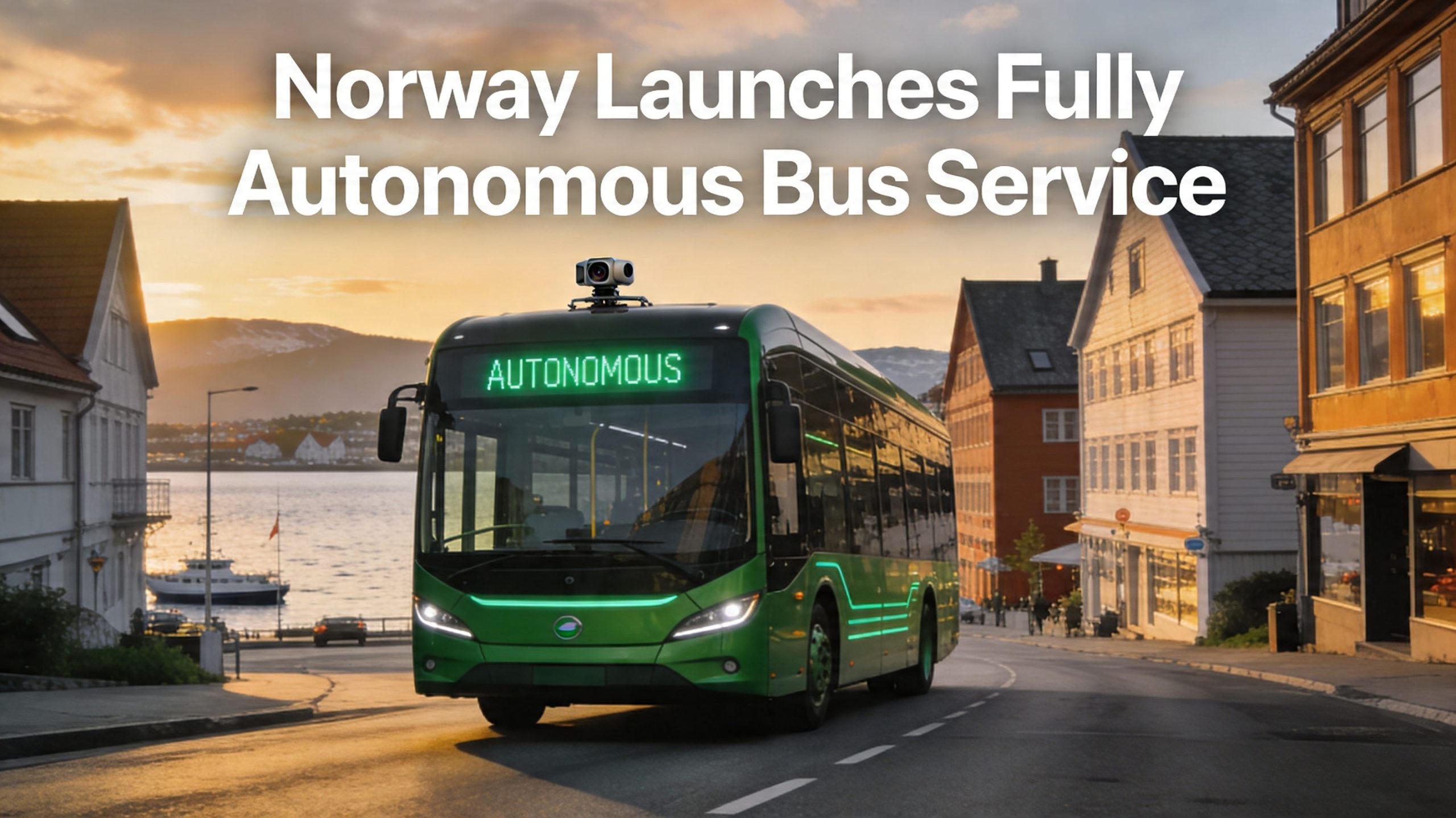
In a landmark move, Norway has taken a significant step forward by allowing an autonomous bus to operate on regular public routes without a safety driver onboard. The approval, granted by the Norwegian Public Roads Administration, marks the first time such a service will run in the country under fully driverless conditions.
The initiative is being led by transport providers Vy and Kolumbus, using the Karsan autonomous e-ATAK bus. While the vehicle’s self-driving capabilities are powered by Adastec, the broader operational framework is managed through Applied Autonomy’s xFlow platform. Acting as a centralized command system, xFlow enables remote supervision of vehicles and allows operators to assist passengers from a distance.
According to Applied Autonomy CEO Olav Madland, the technology addresses one of the biggest barriers to scaling public transport. By allowing a single remote operator to oversee multiple buses at once, the system reduces dependence on traditional drivers and makes it possible to sustain — or even expand — services in areas where hiring staff has become increasingly difficult.
The shift toward remote-assisted autonomous operations also introduces a more cost-efficient model for public transportation. With fewer personnel required behind the wheel and more emphasis on centralized fleet management, operators can optimize resources and reduce operational expenses.
Madland emphasized that this approach not only improves efficiency but also strengthens the financial sustainability of transit systems. By reallocating roles from driving to remote monitoring and passenger support, transport providers can deliver more service without proportionally increasing costs — bringing autonomous buses closer to becoming a commercially viable solution rather than just an experimental concept.