
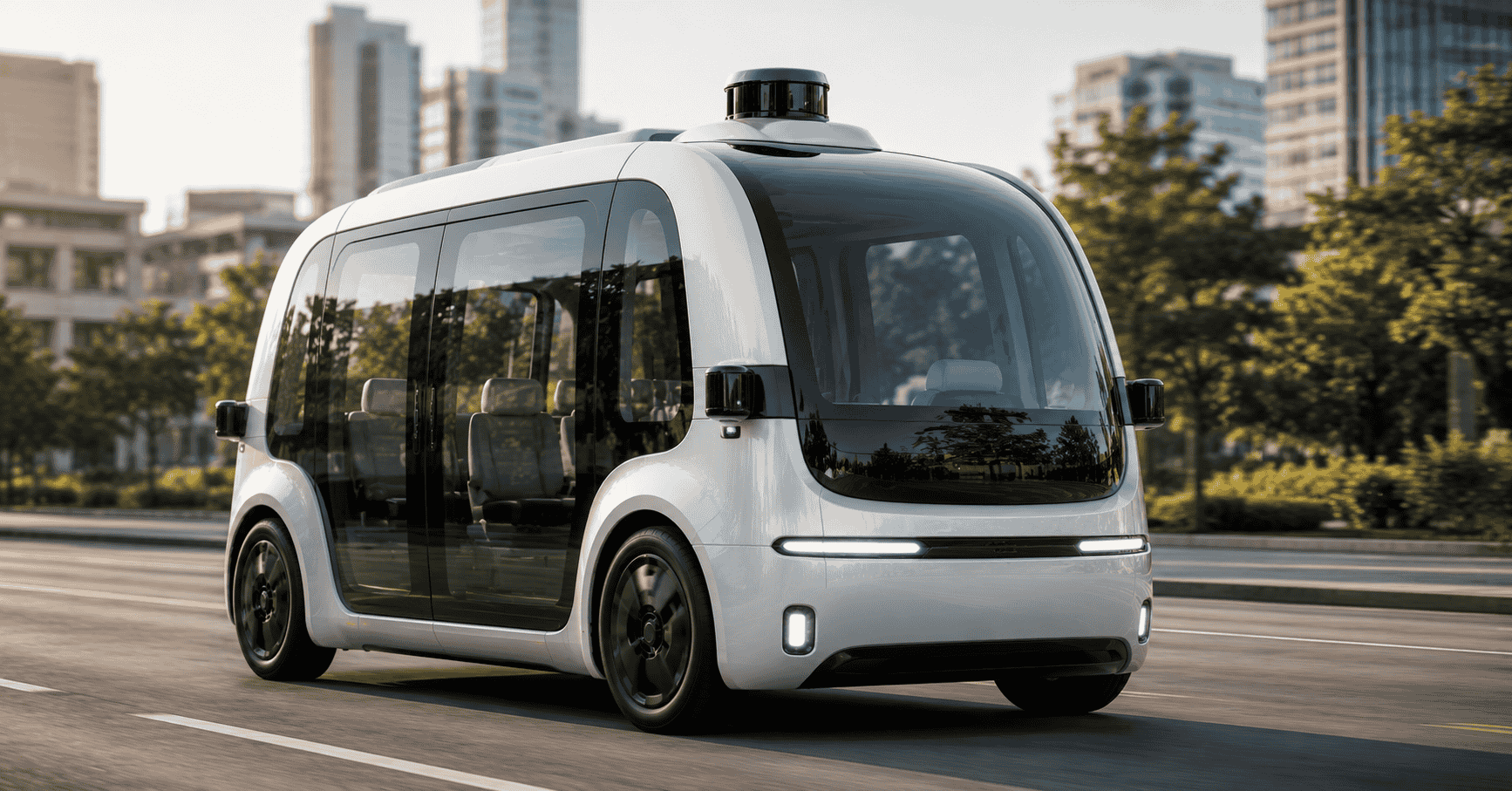
Federal regulators are moving to update vehicle safety rules in a way that could speed up the rollout of fully autonomous vehicles across the U.S. by eliminating a long-standing design requirement.
The National Highway Traffic Safety Administration (NHTSA), an agency within the U.S. Department of Transportation, has proposed revising the Federal Motor Vehicle Safety Standards to remove the requirement that vehicles built exclusively for autonomous operation include a brake pedal. According to Bloomberg, the proposed rule would apply only to purpose-built self-driving vehicles and would not change requirements for conventional passenger cars, which would still need manual braking controls.
Modernizing outdated safety standards
The proposal reflects the federal government’s effort to adapt decades-old vehicle regulations to emerging autonomous technology. Existing safety standards were created long before manufacturers began developing vehicles without steering wheels, brake pedals, or other driver-operated controls, leaving companies with regulatory obstacles as they work toward commercial deployment.
Those challenges have already affected the industry. General Motors previously halted development of its Origin autonomous shuttle, a vehicle designed without traditional driving controls, with regulatory uncertainty cited as one of the reasons behind the decision.
Meanwhile, Tesla CEO Elon Musk has consistently advocated for a unified federal framework governing autonomous vehicles, arguing that national regulations would provide greater clarity and accelerate the deployment of self-driving technology across the country.
A potential boost for robotaxi expansion
If finalized, the proposed rule could benefit companies developing purpose-built robotaxis. Tesla’s Cybercab, for example, is designed as a two-passenger autonomous vehicle without a steering wheel or pedals, making it a direct example of the type of vehicle the proposal is intended to accommodate.
Tesla began operating a limited robotaxi service in Austin last year using a small fleet of Model Y SUVs before expanding testing to Dallas and Houston. Even with those additions, the company’s Texas fleet remains below 100 vehicles.
Competitors continue to scale their own operations. Waymo already has thousands of autonomous vehicles providing ride-hailing services in 11 U.S. cities and plans to expand to 20 markets before the end of the year. The Autonomous Vehicle Industry Association, whose members include Waymo and Amazon’s Zoox, has also urged Congress to establish a comprehensive national policy for autonomous vehicles to support broader commercial adoption.
Safety requirements remain unchanged
While the proposal removes the need for a physical brake pedal in certain autonomous vehicles, it does not relax existing vehicle safety expectations. NHTSA emphasized that all applicable braking performance standards—including stopping-distance requirements—would remain in effect regardless of vehicle design.
The agency also said it is continuing to develop performance-based safety standards tailored to autonomous driving systems. In addition, NHTSA will retain its authority to investigate potential safety defects, monitor the performance of autonomous vehicles, and require recalls when necessary.
Why it matters for dealerships
For automotive retailers, the proposed rule represents another indication that purpose-built autonomous vehicles are moving closer to commercial reality. As robotaxi fleets expand, dealers may see new opportunities in fleet sales, maintenance and repair services, software support, and customer education related to autonomous transportation. Keeping pace with evolving regulations and technology will be increasingly important as the industry prepares for the next phase of self-driving mobility.